2014-03-17

The Wheel of the Year

Fun fact: During my last semester of college, I was the token atheist (not an official title) of my school's Pagan organization. Then, as now, I was interested in studying religions, and Paganism was something I knew next to nothing about. So, I joined the group to learn a thing or two. It was  pretty cool.

One of the big things was the Wheel of the Year. In a nutshell, it's a series of eight, evenly spaced seasonal festivals. Half of them correspond to the equinoxes and solstices, while the other half fall in between.

While the dates, activities, and even existence of these festivals varies between various Pagan denominations*, I'm going to try and stick with the modern Wiccan tradition, if only because it's the only book I have about the subject at the moment.

The Wheel of the Year is meant to be a metaphor for the lives of the god and the goddess. Describing these entities would take more than a single paragraph. While I may write a proper article about the topic, for now it's enough to know that a lot of Wiccans see the world as maintained by a pair, god and goddess, whose form and name change throughout the year in relation to nature.

Yule (Winter Solstice)

December 22

This one should be familiar to most people. A lot of Christmas imagery originates from this holiday: white-red-green colours, mistletoe, "yule" logs, &c. During the solstice, the light of day is at its shortest. However, this also marks the turning point where the length of sunlight begins to increase.

Because of the coming of more sunlight, Yule is seen as the rebirth of the god from the goddess. However, the god is not yet strong enough to fight off the night, resulting in a continued season of cold, long nights, and death.

Imbolc

February 2 (pronounced "em-bolc")

At this point, the goddess has recovered from giving birth to the god. Both are gaining strength and the days are getting longer. On a more practical level, it is a celebration of light and fire encouraging spiritual and physical cleansing.

Ostara (Spring Equinox)

March 21

It's finally Spring! Sticking with the god-goddess metaphor, this is the point when the god is something of a preteen. The goddess takes on the role of virgin again, resulting in themes of fertility, with related symbols like rabbits and eggs.

Many of the modern Easter traditions come from this festival, particularly the Easter bunny and coloured eggs.

Beltane

April 30

The god is now of age and joins with the goddess (if you know what I mean). The maypole, a common pastime during this celebration, is symbolic of this union (wink wink). The happiness of this union spreads to the Earth and all people that walk upon it. This festival is meant to be fun and not at all somber.

Litha

June 22 (Summer Solstice)

The god and goddess are enjoying their marriage. However, the god is maturing and understanding that his upcoming sacrifice is necessary. This realization puts a damper on the mood, and the days begin to grow shorter.

This festival was particularly popular with the Celts. Stonehenge and other stone circles were raised and aligned with the day's summer sun.

Anime image is tangentially related

Lughnasadh

August 1 (pronunciation is inconsistent)

It is this festival when the god sacrifices himself for the harvest, as represented by the harvest of various grains. He doesn't go out without a fight, though. He leaps from grain to grain until the very last sheaf is cut.

Mabon (Autumn Equinox)

September 21

Mabon is a festival for giving thanks to the god and goddess for a bountiful harvest. The god is dead, granted, but he is just in the underworld awaiting his rebirth.

This is the first Pagan festival I, personally, got to celebrate. There wasn't any ritual or anything; it was fairly laid back. It felt very similar to the traditional American Thanksgiving with lots of food and friends.

Samhain

October 31 (pronounced "saoh-win")

This is Halloween, guys. The goddess is an old crone, the god is deep in the underworld, and the new(?) god is growing in the womb. The barriers between the worlds of the living and the dead are at their weakest, allowing communication between the two. As such, it is a festival ready made for giving thanks to passed ancestors.

If Mabon was my first festival, Samhain was my first ritual. Several of us gathered at the group leader's home after sunset. A circle was cast and everyone stood in the cardinal direction associated with their element (I was an earth element but cannot honestly remember what direction I was facing). We each took turns honouring deceased family and friends, calling them to join us for the occasion. Afterward, the circle was dispelled and that was that. The rest of the evening was spent chit-chatting as folks trickled home.

Regrettably, this was also my last festival. I graduated before the next one.

My time with the Pagan group was very fun and fascinating. I certainly learned a lot. The group was very respectful and open. They all clearly believed in their spirituality (not all were Wiccan, mind) but did nothing to force their beliefs on me. I am grateful to have been a part of it.

Sources:
Personal experience
"The Book of Wicca" – Lucy Summers
Aquarian Tabernacle Church

* It should be noted that "Paganism" isn't a single religion. Rather, it's an umbrella term for, well, any non-Abrahamic religion. While some of the larger religions have broken free from the term, not all have been so lucky: Wicca, Norse, Celtic, Greco-Roman, and many others all fall under the category of Pagan.

2014-03-03

The Early Caliphate

Rashidun - The Rightly Guided Caliphs
In the year 632 CE, Mohammed passed away. Barely a moment passed before the expanding Muslim community began asking who would lead them. The first leader to step up took the title of "caliph", which modestly meant "deputy". This man, Abu Bakr, Mohammed's father-in-law, became the first of the four so-called Rightly Guided Caliphs, which, according to Sunni tradition, tried hardest to stay true to Mohammed's revelations.

Abu Bakr

Shortly after Mohammed's death, the Muslim community faced an existential crisis. Without a single leader, it was going to break apart into the separate communities that existed before. To prevent this, representatives gathered together and decided to elect someone that will hold everyone together. To fill this newly created role of caliph, they chose Abu Bakr, Mohammed's well-respected father-in-law.

This was one of many contentious moments of the early caliphate. There were those who saw Ali, Mohammed's son-in-law, as heir apparent. While the others were electing the new caliph, Ali respectfully stayed by Mohammed's side. This was the beginning of the well-known Shia-Sunni schism.

An aside: In an extreme oversimplification, Sunnis see reaching communal consensus as spiritual guidance, while the Shia see appointed leaders as the proper spiritual guides (i.e. Mohammed's chosen successor, Ali, and not the community-elected successor, Abu Bakr). As a result, the followers of Ali felt cheated and victims of the tyranny of the majority.

After some time, Ali accepted Abu Bakr, and Abu Bakr got to work dying. I don't mean clothes, I mean no longer living. Abu Bakr was caliph for only about two years before dying of a fever. During his short tenure, he managed to hold the community together, but to do so he established the idea linking apostasy with treason.

Omar

On his deathbed, Abu Bakr nominated Omar as his successor, and the community properly elected him. Omar was described as having a tough-guy exteriour. However, he was actually very frugal and humble.

At the time, Byzantium and Persia were moving to take advantage of young Arabia's weakness. The Byzantines were largely kept at bay, but Omar decided to face the Persian threat head on. This war against the Persians was the first physical battle to be declared a jihad. Meanwhile, the battle against Byzantium resulted in the capture of Jerusalem. Following all of these battles, Omar was not strict with the conquered. He did not force anyone to convert, so long as they agreed to pay a jizya, or religious tax.

Ten years following his election, Omar was assassinated by a crazed Persian slave. On his deathbed, instead of choosing a successor, he chose representatives from the community to elect the next caliph.

Othman

The company elected Othman, the old and rich fifth cousin of Mohammed. When I say rich, I mean exceptionally rich. He was a skilled businessman that maintained much of his wealth after moving to Medina with the rest of the community.

Nevertheless, Othman was very humble and charitable. He converted to Islam early and always had a nagging fear that he was not worthy of the heaven that awaited. At all times, he tried to do good for the community.

When Othman was elected as caliph, the Muslim community was no longer a small group that needed minimal governance. It had grown into its own entity, with its own taxes, courts, and infrastructure that was managed by the caliph. Othman was a very capable manager, but he had a habit of filling positions with friends and family of his own clan, the Umayyads. One name in particular was Mu'awiya, who Othman appointed as governor of Damascus. Remember that name, since it will be important later.

Meanwhile, the appointed governor of Egypt was collecting a much larger tax than his predecessor. If there's one thing the common folk dislike, it's a tax increase. A mass of petitioners marched on Othman's palace demanding the replacement of the governor. After some time, Othman relented and agreed. The mob was largely satisfied.

At least, they were satisfied until they received word of a "secret letter". On their way home, the group intercepted a messenger carrying a message that ordered the governor to arrest and physically punish the protestors. The letter did have Othman's seal, but, when confronted, he denied all knowledge of it.

The truth is not known, but Othman paid with his life. The mob eventually stormed his palace and assassinated the elderly caliph. Many believe someone's hand moved the mass to murder, but it is not agreed whose hand it was: Ali? Aisha? Mu'awiya?

Ali

Battle of Siffin
At last, it was Ali's turn to be elected caliph. His election succeeded largely to appease the mob that lingered following Othman's death, and he entered the leadership role with the cloud of death hanging above him. Making matters worse were separatists chipping away at his legitimacy from the inside. Mu'awiya was calling for punishment of the unknown assassins, the upper class politicians would not listen to him, and Aisha was raising her own army and denouncing Ali.

Mu'awiya was using symbolism to its fullest. He had and frequently waved around the supposed bloody shirt that Othman wore when he was killed. He demanded that the assassins receive just punishment for the death of the caliph. This was not simple, as no one knows who exactly killed Othman, and executing an entire mob was simply not practical.

In an effort to appease the mobs, Ali attempted to sack many of Othman's appointed governors and tried to reverse the economic reforms. Unfortunately for Ali, many of Othman's reforms had created a new upper class that refused to live the austere, religious life style. Most of the governors refused to step down.

Aisha, picking up on Mu'awiya's rabble-rousing, began a charismatic effort to denounce Ali. This came to a head when the armies of Aisha and Ali met. Before there could be any bloodshed, the two met and managed to clear the bad blood between them diplomatically. Unfortunately, some of Ali's men acted against orders and launched a surprise attack. This escalated into a full battle known as the Battle of the Camel. At the end of the bloodshed, Ali arguably won and settled things between Aisha, but a great deal of Muslim blood was spilled.

Shortly after this confrontation, Mu'awiya officially declared that the caliphate belonged to him. In 657 CE, the armies of Ali and Mu'awiya met at Siffin, Syria. The battle lasted for months. Mu'awiya's troops finally gained the upper hand by attaching pages of the Qu'ran to their weapons, which forced Ali's troops into talks for fear of defiling the holy text. At the end of the talks, Mu'awiya kept his hold on Syria and Egypt, while Ali kept his hold on everything else.

In 661 CE, a member of the radical Kharijites that disagreed with Ali's peace deal stabbed the caliph with a poison laced sword, resulting in Ali's death. The last of the Rightly Guided Caliphs was dead. Whether Mu'awiya had a hand in this or not continues to be debated, but he had won. He had become the caliph.

With Mu'awiya's ascension, the Arabs had ceased to be a solely a religious community. The Sunni-Shia split was all but assured. The Ummayyad Empire had begun.

 Sources:
Destiny Disrupted: A History of the World Through Islamic Eyes” - Tamim Ansary
After the Prophet: The Epic Story of the Shia-Sunni Split” - Lesley Hazleton

2014-01-28

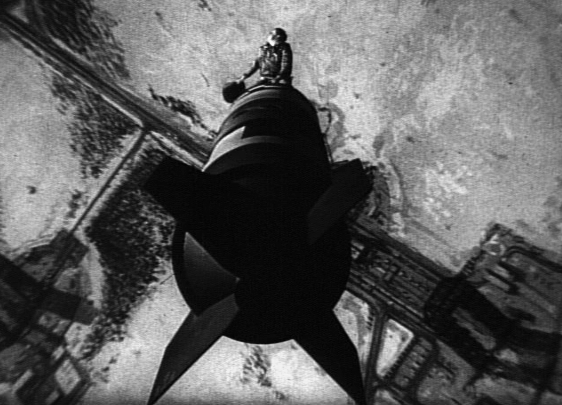
…And Love The Bomb

Lets speak for a moment about the atomic bomb. Specifically, a bit about its history. Since this particular weapon is so pivotal in human history, I figured it'd be a good idea to see what happened.

1930s – The Science

It was 33 years since Albert Einstein asserted his famous equation, E=mc2, which implies that mass can be transformed into energy. Two Berlin scientists, performing an experiment with uranium, bombarded the heavy atoms with neutrons and split it. This was nuclear fission. This was transforming mass into energy. This was what would power the first generation of nuclear weapons.

1940s – The Atomic Bomb

In August of 1939, Albert Einstein sent a letter to President Roosevelt expressing concern that the Germans may be developing a weapon that was powered by a nuclear chain reaction. The President agreed that "this requires action". The Manhattan Project begins. There were many challenges involved, including: how to procure enough refined uranium and plutonium, how to begin a chain reaction, and, finally, how to detonate the fuel. These issues were largely worked out by the summer of 1945, when US scientists had created the first nuclear bomb. On 1945 July 16, "Fat Man" was detonated at Alamogordo, New Mexico. The blast was about as powerful as 15,000-20,000 tons of TNT.

Fast forward a few weeks and refocus on the Pacific theatre of World War II. Japan has yet to surrender. President Truman, who "regarded the bomb as a military weapon", issued orders to prepare and deploy three atomic weapons on Japan.

On 1945 August 6, the B-52 "Enola Gay" made a bombing run for Hiroshima, Japan and dropped a 13-kiloton atomic bomb. About 142,000 people died.

On 1945 August 9, the B-29 "No. 77" dropped another atomic bomb on Nagasaki, Japan. About 75,000 people died.

On 1945 August 14, Japan surrendered. Whether these bombings encouraged Japan's surrender continues to be debated, but the atomic bomb had become a centerpiece of American foreign policy. The US thought it would be another several decades before any other countries could have this power.

Around 1949 August 27, the Soviet Union detonated their own atomic bomb.

1950s – The Hydrogen Bomb

Feeling threatened by the USSR's rapid advancement, President Truman approved research into a new type of weapon on 1950 January 31, the hydrogen bomb. Instead of fission, the hydrogen bomb relied on nuclear fusion, and would be roughly one-thousand times more powerful than current fission bombs.

There were similar questions as with the first atomic bomb: what kind of fuel to use and how to get it, and how to generate enough initial energy to begin the fusion. The decision was to use lithium deuteride as fuel and traditional fission explosives to trigger the fusion. It was the first day of November 1952, on a Pacific islet known as Elugelab, that the first fusion bomb, "Mike", was detonated. The blast was about as powerful as 12,000,000 tons of TNT. It was only nine months later when the Soviet Union detonated their own hydrogen bomb.

On the plus side, nobody died as a result of nuclear explosions. Well, not directly, at any rate.

1960s – Missiles and Submarines

Now that the Soviets had the hydrogen bomb, the new question for the US was how to deliver these bombs. The traditional bombers were relatively slow and easily destroyed by enemy defences. Interest shifted to missiles.

Beginning in 1957, US engineers created newer and newer versions of nuclear ballistic missiles. The first intercontinental ballistic missile (ICBM) was the Atlas: 85 feet long, 120 tons, and accurate within 5 miles. What followed were continuous improvements with missiles named: Titan, Titan II, and Minuteman. The Minuteman had a range of 6,000 miles and was significantly more accurate. For most intents and purposes, there is no defence for a missile closing in at 9,400 miles per hour.

Alongside ballistic missile research, developments were being made to submarine warfare. In 1956, the submarine-launched ballistic missile (SLBM), Polaris, was introduced. At only about 28 feet long, this nuclear warhead could be loaded into and fired from a submarine. Further refinements to firepower and distance were made with the Poseidon and Trident missiles.

Starting in 1967, the US started to seriously look into anti-ballistic missile (ABM) defence. Many ideas were developed, including The Safeguard system that would shoot down incoming missiles with its own missiles. However, none of the ideas bore effective fruit. Before any decent solutions could be created, new weapons were being developed that defeated them anyway. For example, the multiple independently targeted reentry vehicle (MIRV) overcame these proposed defences by simply putting a cluster of warheads on each missiles. An ABM system may take out the first warhead, but the others would still make the target. It wasn't until 1973 that the Soviets would test their own MIRV.

1970s – Improved Accuracy and Cheap Uranium

In October of 1973, the Yom Kippur War flared up, resulting in nuclear-armed tension akin to the Cuban Missile Crisis. This encouraged another push into further research. Specifically, improving accuracy. The better a missile's accuracy, the better the destructive power.

Building off of the MIRV, US engineers began work on the maneuverable reentry vehicle (MARV). By adding weights, flaps, sensors, and GPS to the vehicle, it can be guided as it descended on its target.

Next came the cruise missile. These missiles could be launched from just about any type of vehicle and flew relatively low to the ground to avoid radar. Cruise missiles were cheap ($1.4 million each), far-reaching (2,000 miles), and accurate (within 100 feet).

The USSR was, of course, developing the same technology. At this point, only five countries had the technical know-how to develop and deploy nuclear weapons: the US, the USSR, the UK, France, and China. That changed on 1974 May 18, when India detonated their own 12-kiloton nuclear bomb.

The fact that a sixth country detonated a nuclear explosive was not the shocking thing; what shocked the world was the fuel they used. Traditional uranium and plutonium for bombs was created in expensive enrichment facilities. Instead, India reprocessed spent nuclear reactor rods, which contained various forms of the weapons-grade material. As nuclear energy was not uncommon, the cost for other countries to create their own nuclear weapons significantly dropped. By 1977, nine more nations had the bomb: Australia, Belgium, Canada, Israel, Italy, Japan, South Africa, Taiwan, and West Germany. By 1982, twenty-one more joined the club.


1980s – This Book Was Published

Sadly, the history lesson ends here. The book I was reading (see below) was published in 1982, so I don't have any more history close at hand. I'll probably do some more digging, but I think I've had enough writing for now.

Sources:
"The Bomb" - Sidney Lens

2014-01-25

Post-Bomb Secrecy Bonanza

It seems that a lot of the super secret government organizations and procedures that are all the rage nowadays saw their start shortly after the successful deployment of the atomic bomb. The bomb was, well, the bomb-diggity and gave the US a major upper hand in global diplomacy. At least, for a little while. In an effort to ensure this advantage, the government established several new forms of secrecy to keep the enemy always one step behind. Three new measures that are immediately recognizable are as follows:

Central Intelligence Agency (CIA)

In 1947, the National Security Act was signed by President Truman. One of the things it established was the National Security Council, an intelligence organization for coordinating foreign and domestic policy in the Executive Branch. The operational branch of this organization is the CIA. 

National Security Agency (NSA)

Another executive order, at the behest of the National Security Council, created the NSA on 1952 Nov 4. Its existence was labeled as classified and not acknowledged for another five years. (This was all the book told me, so I did a little further digging to add some meat to this paragraph.) Originally, the various pre-NSA organizations had a messy chain of command. The Secretary of Defense, the Secretary of State, and the Director of Central Intelligence were given the task of of reorganizing these separate groups. The decision was made to bring them together and make them directly subordinate to the Secretary of Defense. It became official on 1952 Oct 24 with a revision to NSCIB No. 9. 

Classified information

Anyone that has ever worked for the US government is probably aware of its information sensitivity scale. This marks information from Confidential, Secret, or all the way up to Top Secret (nowadays, there are even some in between). This came to be via Executive Order 10501, signed by President Eisenhower on 1953 Nov 5. 

Sources:
"The Bomb" - Sidney Lens
"The Early History of NSA" - George F. Howe

Truman with Newsmen

2014-01-24

The Life and Times of Mohammed

Okay, this post is going to sum up what I've learned about Islam's prophet from two books (see below). I read After the Prophet some time ago, but decided to bring it back out since I'm currently reading Destiny Disrupted, which gives Mohammed only about a single chapter. I figure the two of them together should give me a good enough picture.

Mohammed was born sometime around 570 CE. He was born a member of the Quraysh tribe, which was basically the leading group in Mecca. Sadly, both of his parents died while he was young, and he was basically a nobody for quite some time.

At 25, Mohammed was hired by a well-to-do businesswoman, Khadija. In a relationship that would totally work nowadays, boss and employee fell in love and married. This turned out to be pretty handy. After Mohammed was first visited by the angel Gabriel, Khadija was the first person to believe him. Until Khadija's death he never married another woman.

After a while, Mohammed received more revelations. Things along the lines of: there is only one God, give up immoral vices, help the poor, &c. He started to take this message public and gathered some followers. Several of these followers will be important later: Abu Bakr, Omar, Othman, and Ali.

Mecca's leadership did not like this one bit. They had built up a big religious tourism industry around various idols and gods. They decided this loudmouth had to be eliminated. The assassination was set for an evening in September, 622 CE. Mohammed found out about the plot and evacuated to Yathrib (later named Medina).

This flee from Mecca, called the Hijra, was kind of a big deal. It marks year 0 on the Muslim calendar. It's so big because it's considered the start of the Umma, or the Muslim community. Members would abandon their tribes and clans and become one with the Umma. They would live together in peace and all would be cared for.

Mecca wasn't done with Mohammed yet, though. After the Hijra, there were several battles that tried to eliminate Mohammed. They didn't succeed and, after a while, they basically gave up. A few years later, after a dream, Mohammed decided it was time to return to Mecca. So he did. Eventually, the elders of Mecca gave up the city and it rolled into the Umma.

One of the first things Mohammed did in Mecca was rededicate the Kaaba. Originally, this big black box was a tourist attraction that housed various local idols. Not anymore. The idols were destroyed and Mohammed declared it the most sacred place (supposedly, it was built by Abraham himself). The tourism industry in Mecca is still doing fine to this day.

Twenty-five years after their marriage, Khadija died. Mohammed married nine times after this for political reasons, but his favourite wife was the young firebrand Aisha. That's another name to remember, since it will be important later and on the test.

It was in Aisha's company that Mohammed would die of illness at the age of 63.

Sources: